



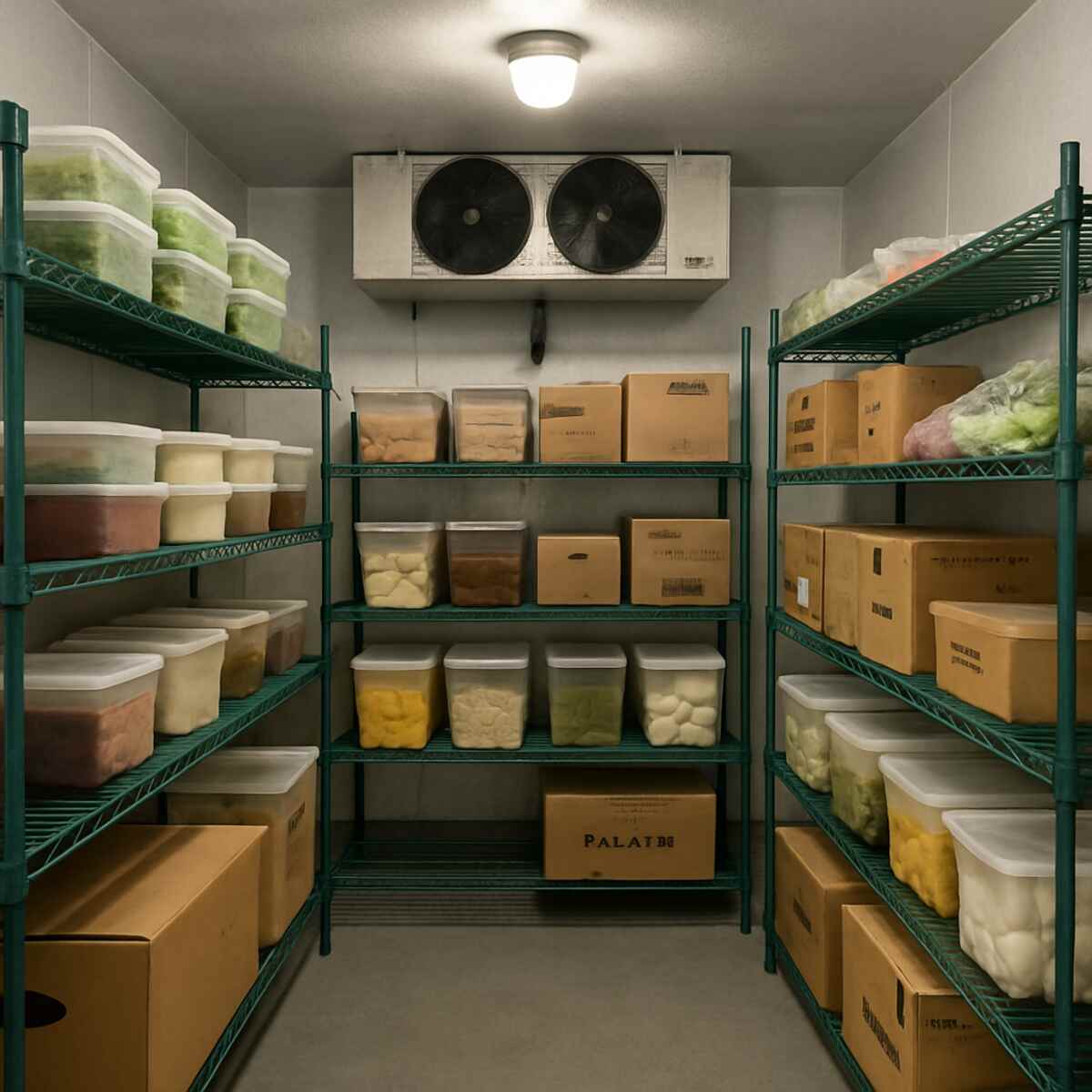
Is your current fridge overflowing during the busiest part of the week? For many growing businesses, from restaurants to floral shops, that’s the first sign you need more than just a bigger refrigerator—you need professional commercial cold storage. Before you start looking at brands, the most important decision is choosing between two very different systems: a walk-in cooler or a walk-in freezer. How do you choose the Best Walk In Cold Room Companies?
The difference comes down to operating temperature. A walk-in cooler is designed to keep products fresh and chilled, holding them safely above freezing (typically 35°F to 41°F). In contrast, a walk-in freezer is built for long-term preservation, maintaining temperatures around 0°F (-18°C). Choosing correctly is everything; for example, a florist needs a cooler to keep bouquets vibrant without damaging delicate petals, while a butcher relies on a freezer to store meat safely for months. This is the first filter when comparing walk-in cooler vs freezer manufacturers.
This choice directly impacts your bottom line. Because a freezer must work much harder to maintain a sub-zero environment, its refrigeration systems are more powerful, use more energy, and carry a higher price tag than a cooler’s. Deciding whether your inventory needs to be chilled or deep-frozen is the essential first step toward finding a reliable system that protects your products and fits your budget.
Table of Contents
The “Lego Set” vs. The Custom Fit: Choosing Between Modular and Custom-Built Cold Rooms
Once you’ve decided you need a walk-in, your first big choice is how it will be built. This decision between a modular and a custom-built room isn’t just about technical details; it’s about what works best for your budget, timeline, and physical space.
Think of a modular cold room like a high-quality kit. The insulated walls, ceiling, and door panels are all pre-made in a factory and designed to lock together quickly on-site. Because they are mass-produced in standard sizes, modular walk-in cooler manufacturers can typically offer a lower upfront cost and much faster installation. If you have a simple, rectangular space and need to get up and running quickly, a modular unit is often the most efficient choice.
On the other hand, a custom-built cold room is exactly what it sounds like—designed from scratch to fit your unique space perfectly. If your building has low or sloped ceilings, support columns in the way, or an L-shaped corner you want to utilize, custom cold room installation services are your answer. This approach maximizes every inch of available storage, but it generally requires a larger investment and a longer construction time.
The debate over prefabricated vs custom built cold rooms really comes down to your priorities and premises:
- Installation Speed: Modular is faster.
- Initial Cost: Modular is often more affordable.
- Flexibility & Space: Custom offers a perfect fit for any awkward space.
Ultimately, your available space is the biggest deciding factor. If you have a straightforward, open area, a modular box is a fantastic, cost-effective solution. If you need to tuck your cold room into an unusual spot to make it work, going custom is the only way to avoid wasting valuable space. With that choice made, the next critical question is size.
How to Size Your Cold Room to Maximize Profit, Not Just Space
Choosing the right size for your walk-in is less about the tape measure and more about your business’s rhythm. A common mistake is thinking “bigger is better,” but an oversized cold room is an energy hog you’ll pay to cool 24/7, even when it’s half-empty. This directly impacts how much a walk-in freezer costs to build and operate. Conversely, a room that’s too small can limit your ability to buy in bulk, choke your sales during a rush, and lead to costly food spoilage. The goal is to find the perfect balance where your cold room supports your business growth without wasting a dime.
Instead of just measuring the empty corner of your stockroom, think about your busiest week of the year. For a restaurant, that might be the holiday season; for a florist, it’s the week before Valentine’s Day. Calculate the maximum amount of inventory you need to hold during that peak period. A professional walk in cold room design and build partner will ask you about this “peak inventory” because it’s the true measure of what you need. Sizing for your average Tuesday means you won’t have the capacity for your most profitable Friday.
Finally, once you have your inventory number, remember that your products need space to breathe. Cramming boxes wall-to-wall blocks airflow, creating warm spots where bacteria can grow and forcing your cooling system to work overtime. As a rule of thumb, add an extra 20-30% to your peak inventory space to allow for proper circulation and walking paths. This buffer is essential for effective cold storage solutions for restaurants and ensures consistent, safe temperatures. Having the right amount of empty space is just as important as the box itself, and the quality of that box is where you’ll find your next big savings.
Why Wall Panels Are Your Biggest Money-Saver: Understanding Insulation
After you’ve settled on the right size, the single most important factor for your budget is the quality of the cold room’s walls. Think of it like the difference between a high-end thermos and a paper cup. Both hold liquid, but only one keeps it cold for hours. The insulation inside your walk-in’s panels works the same way; its only job is to keep the cold in and the heat out, which directly determines your monthly energy bill. In fact, great insulation can save you more money over the life of your unit than almost any other feature.
To measure this, the industry uses a simple “insulation score” called an R-value. You don’t need to know the science behind it, just this: a higher R-value means better insulation and lower energy costs. When you’re in the walk in cold room design and build phase, asking for the R-value of the wall panels is a critical step. A company that focuses on a higher R-value is a company focused on saving you money in the long run.
You’ll generally encounter two types of insulation: Polyurethane (PUR) and Polystyrene (XPS). While Polystyrene is often cheaper upfront, high-quality, energy efficient cold room panels almost always use Polyurethane. PUR offers a significantly higher R-value for its thickness, meaning it’s a more powerful insulator. Choosing it is an investment that pays you back every month on your utility bill. This is one of the key details to look for in a refrigeration company, as it shows they prioritize long-term performance. Of course, even the best-insulated box is useless without a powerful, reliable “engine” to cool it.
The “Engine” of Your Cold Room: What to Look for in a Refrigeration System
If the insulated panels are the body of your cold room, the refrigeration system is its engine. This collection of pumps and coils is what actively removes heat, and its reliability is what stands between you and thousands of dollars in spoiled inventory. While the technology can be complex, you only need to focus on two things: the quality of the parts and whether the system is the right size for your room. A failure here isn’t an inconvenience; it’s a business emergency.
At the heart of this system is the compressor. Think of it as the hardest-working part of the engine. You don’t need to be a mechanic, but you should ask potential suppliers what brand of compressor they use. Reputable industrial refrigeration contractors will use well-known, established brands. The reason is simple: when you need service, parts for a common brand are much easier and cheaper to find, getting you back up and running faster.
Just as important as quality is proper sizing. An undersized unit will run constantly trying to keep up, burning out prematurely. Likewise, a system that’s too powerful will switch on and off in short, inefficient bursts, wasting electricity and causing excessive wear. Proper sizing is critical for consistent temperature, a key part of HACCP compliant refrigeration systems. A good company takes the guesswork out of this by performing a calculation based on your room’s size, insulation, product load, and local climate to specify the perfect system. This professional sizing, combined with quality components, is your best defense against costly breakdowns and makes future cold room maintenance and repair far more straightforward.
Top Walk-In Cold Room Companies: What They’re Known For
The next step is choosing the right partner to build your walk-in. When you start searching for the best walk in cold room companies, you’ll find that it’s less about finding a single “best” brand and more about finding the one that specializes in what you need. Think of it like buying a vehicle: you wouldn’t buy a sports car to haul lumber. The right company depends on your specific business goals, whether that’s speed, durability, or standard-sized efficiency.
For many small businesses, a straightforward, reliable unit is the perfect fit. This is where a company like Nor-Lake excels. They are one of the biggest names in the industry, known for producing high-quality, pre-fabricated modular systems. If you have a standard-sized space and need a classic 8’x10′ cooler for your restaurant or a small freezer for your bakery, Nor-Lake is a go-to choice. Their products are widely available and serviced, making them a dependable workhorse for common applications.
On the other hand, some operations demand a higher level of durability. If your walk-in will face constant, heavy use—think of a busy butcher shop or a brewery with pallet jacks—you might look to commercial cold storage builders like American Panel. This brand has built a reputation for fortress-like construction. They focus on features designed for longevity, like reinforced corners and heavy-duty doors that can withstand years of intense traffic. It’s an investment in a unit that’s built to last under the toughest conditions.
But what if your needs are somewhere in between, or you have an unusual space to fill? Perhaps you need a unit fast to get your new café open. This is where a manufacturer like U.S. Cooler often shines. They are known for their flexibility, offering quick lead times and a vast library of modular panel sizes that can be configured to fit less-conventional footprints without requiring a fully custom—and more expensive—build.
Consider these specializations when making your choice:
- Nor-Lake: A top choice for standard, widely-available modular systems.
- American Panel: The premium pick for extreme durability and high-traffic use.
- U.S. Cooler: Great for flexible sizing and getting a quality unit quickly.
Knowing these key players helps you narrow down the field. However, a company’s quote is only the beginning of the story. The upfront price doesn’t always reflect the true cost of getting your cold room up and running.
Beyond the Sticker Price: Uncovering the Hidden Costs of a Cold Room
A company’s quote for a walk-in unit is a crucial starting point, but it’s only one part of the puzzle. To understand how much a walk-in freezer will truly cost to build and operate, you must look at the Total Cost of Ownership (TCO). This simply means adding the initial price to all the costs you’ll incur over the unit’s lifespan. The cheapest quote today might lead to the most expensive system over five years if it’s inefficient or unreliable.
Of all the long-term expenses, your electricity bill will be the largest. A walk-in cold room runs 24/7, and an inefficient unit can be a massive drain on your monthly budget. This is why investing in better insulation and high-quality refrigeration components for energy efficient cold rooms pays for itself. A slightly higher upfront cost for thicker panels can translate into hundreds or even thousands of dollars in energy savings over the life of the system.
Just like a car needs regular oil changes to avoid engine failure, your cold room needs a preventative maintenance plan. Waiting for something to break is a recipe for disaster—think spoiled inventory and expensive emergency service calls on a holiday weekend. A good plan for cold room maintenance and repair involves routine check-ups to clean coils, check refrigerant levels, and spot small issues before they become catastrophic failures. It’s a small, predictable cost that acts as insurance for your business.
By thinking about these factors—installation, energy consumption, and maintenance—you get a much more realistic picture of the investment. Arming yourself with this knowledge is the key to asking the right questions and choosing a partner who provides long-term value, not just a low initial price.
Your Final Checklist: 8 Essential Questions to Ask Every Cold Room Supplier
The best value goes far beyond the initial quote. To determine which company is truly the right partner for your business, you need to ask questions that uncover their commitment to quality, efficiency, and long-term service. This checklist is your script for a confident conversation, ensuring you can compare every potential supplier on the same critical factors.
Treat your first call with a company like an interview. Use these questions to guide the discussion and take notes on their answers.
- What is the R-value of the wall and ceiling panels? (This tells you how good the insulation is—a higher number means lower energy bills.)
- What brand is the compressor and is it covered by its own warranty? (The compressor is the engine of your system; a reputable brand is a sign of reliability.)
- Is the refrigeration system sized specifically for my products, room dimensions, and usage? (A one-size-fits-all approach is inefficient. The system should be tailored to your needs.)
- What is the total cost including delivery and standard installation? (This helps you avoid surprise fees and get a true “all-in” price.)
- What are the site preparation requirements, like electrical or drainage? (Knowing this upfront prevents unexpected delays and contractor costs.)
- What does the warranty cover (parts, labor, panels) and for how long? (Get specific details—a 10-year panel warranty is different from a 1-year labor warranty.)
- Do you offer preventative maintenance plans after installation? (This shows they are interested in the long-term health of your unit, not just the initial sale.)
- Can you provide references from similar businesses in my area? (Hearing from a fellow restaurant owner or florist is one of the best forms of proof.)
A reputable supplier will have clear, confident answers to these questions. Their responses will give you a complete picture of not just the product, but the service and support you can expect for years to come.
Making Your Final Cold Room Decision
The search for a commercial cold room can feel complex, but you are now equipped to make an informed decision that goes beyond simply needing more space. By distinguishing a good investment from a future headache, you can choose with confidence.
You know how to translate your business needs into clear specifications, weighing a modular unit against a custom build and assessing the true quality of the insulation and refrigeration system. This empowers you to vet commercial cold storage builders based on the long-term value they offer through warranties and reliable service.
You are no longer just purchasing a large appliance; you are making a strategic investment in your business’s security and efficiency. Use the checklist from the previous section and start your first conversation today. You’re ready to choose a partner who will help your business thrive.

